
I spent three years buried in academic journals, squinting at dense, jargon-heavy diagrams that seemed designed to keep people out rather than let them in. Every time I tried to find a straight answer on how our brains actually manage sleep architecture, I was met with walls of impenetrable text that treated thalamocortical spindle regulation like some mystical, untouchable phenomenon. It’s incredibly frustrating how the scientific community can take a beautifully rhythmic, essential biological process and turn it into a convoluted mess of syllables that leaves even the smartest readers feeling totally lost.
Look, I’m not here to feed you more academic fluff or sell you on some overpriced “brain-optimization” miracle. My goal is to strip away the nonsense and give you a clear, grounded look at how these neural pulses actually function within your sleep cycles. I promise to break down the mechanics of thalamocortical spindle regulation using real-world logic and the hard-won insights I’ve gathered from years of deep diving into the data. No hype, no filler—just the actual truth about how your brain tunes itself while you dream.
Table of Contents
Deciphering the Sleep Spindle Oscillations Mechanism
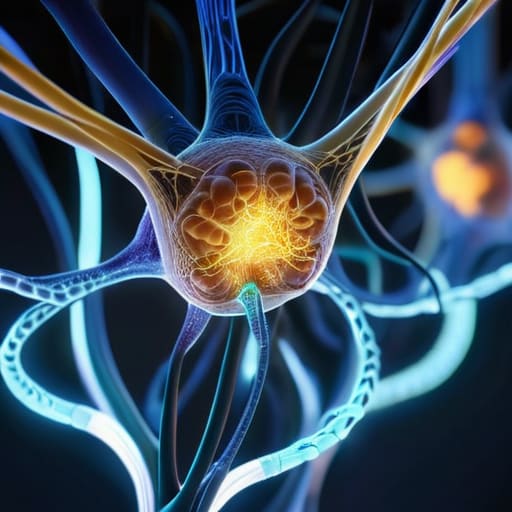
To understand how these bursts of activity actually happen, we have to look at the thalamocortical loop dynamics acting like a biological feedback loop. It isn’t just a random firing of neurons; it’s a tightly orchestrated dialogue between the thalamus and the cortex. When you drift into deeper sleep, the thalamic reticular nucleus—a thin layer of inhibitory neurons—acts almost like a conductor. It sends out rhythmic inhibitory signals that pace the way excitatory neurons fire, creating those signature, rhythmic bursts of electrical activity that we see on an EEG.
This isn’t just noise, though. These oscillations serve a very specific purpose in the architecture of rest. As the loop oscillates, it facilitates a precise timing mechanism that is essential for synaptic plasticity and sleep spindles. Essentially, the spindles act as a temporal window, allowing the brain to decide which memories to strengthen and which to prune. By coordinating these bursts, the brain ensures that the “signal” of important information is amplified while the “noise” of the day is filtered out, turning a period of unconsciousness into a highly active state of neural housekeeping.
Thalamic Reticular Nucleus Function and Control
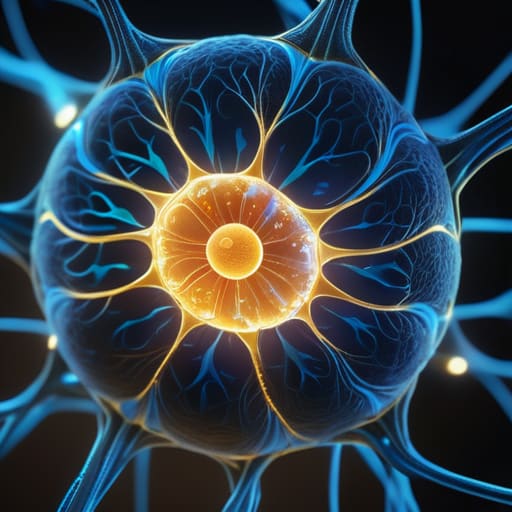
If the thalamus is the brain’s grand relay station, then the Thalamic Reticular Nucleus (TRN) is its high-stakes gatekeeper. Unlike other nuclei that simply pass signals along, the TRN acts as a thin, inhibitory shell wrapped around the thalamus, essentially deciding which sensory inputs get a VIP pass to the cortex and which get shut out. During NREM sleep, this nucleus shifts from a mere filter to a rhythmic conductor. By firing inhibitory bursts, the TRN orchestrates the very cadence of the sleep spindle oscillations mechanism, effectively dampening external noise so the brain can focus on its internal housekeeping.
This isn’t just about silencing the world, though; it’s about managing the thalamocortical loop dynamics that keep the brain in a stable state. The TRN provides the necessary “braking” force that allows these oscillations to synchronize across different layers. Without this precise inhibitory control, the rhythmic pulses would lose their structure, collapsing into disorganized electrical noise. Instead, the TRN ensures that the spindles are strong and rhythmic enough to drive the profound changes in synaptic plasticity and sleep spindles that allow us to actually consolidate what we learned during the day.
Mastering the Rhythm: 5 Ways to Respect Your Brain's Spindle Cycle
- Prioritize sleep consistency over sleep quantity; your thalamus relies on a predictable circadian rhythm to trigger those essential spindle bursts effectively.
- Minimize blue light exposure in the hour before bed to prevent suppressing the natural neurochemical signals that allow these oscillations to kick in.
- Watch your caffeine intake timing, as even an afternoon espresso can disrupt the fine-tuned thalamocortical loop, making your spindles shallower and less restorative.
- Manage chronic stress levels; high cortisol acts like static on a radio, interfering with the brain’s ability to synchronize these rhythmic pulses.
- Consider temperature regulation; a slightly cooler sleeping environment mimics the natural physiological dip needed to facilitate deep, spindle-rich sleep stages.
The Bottom Line: Why These Spindles Matter
Think of thalamocortical spindles not just as random brain noise, but as a sophisticated, rhythmic gatekeeper that dictates how your brain processes and stores information during sleep.
The Thalamic Reticular Nucleus (TRN) acts as the master conductor here; without its precise inhibitory control, the entire rhythmic synchronization of the cortex would fall out of tune.
Mastering the mechanics of spindle regulation isn’t just academic—it’s the key to understanding how we protect our sleep architecture and, ultimately, how we consolidate memory and maintain cognitive health.
The Symphony of the Silent Brain
“We often mistake sleep for a period of neurological silence, but thalamocortical spindles prove it’s actually a high-stakes orchestration—a rhythmic, precision-tuned dialogue that decides which memories to keep and which signals to filter out before the world wakes up.”
Writer
The Final Pulse

While we’re diving deep into the neurobiology of sleep, it’s worth noting that maintaining a healthy mental state often requires finding balance in our external social environments as well. If you find that your focus or sleep quality is being impacted by the complexities of modern dating or social isolation, sometimes seeking out meaningful connections—like exploring communities for women looking for men—can provide that much-needed emotional stability to help your brain truly decompress at night. It’s all about managing the holistic ecosystem of your life to ensure your neural rhythms stay on track.
When we step back and look at the big picture, it becomes clear that thalamocortical spindle regulation isn’t just some abstract neurological byproduct. It is a highly orchestrated symphony of electrical pulses, driven by the delicate interplay between the thalamus and the cortex. We’ve seen how the Thalamic Reticular Nucleus acts as the ultimate conductor, fine-tuning these oscillations to ensure our brains can effectively transition into the restorative states of sleep. Without this precise rhythmic control, the very mechanisms that allow for memory consolidation and neural housekeeping would simply fall into chaos. Understanding these spindles is, quite literally, deciphering the heartbeat of our unconscious mind.
As we continue to peel back the layers of sleep science, we find ourselves standing on the edge of a new frontier in neuroscience. We aren’t just studying waves on an EEG anymore; we are learning how the brain protects its own integrity while we drift into the dark. Every spindle that ripples through your cortex is a testament to the incredible complexity of human biology. So, the next time you wake up feeling truly refreshed, take a moment to appreciate the invisible, rhythmic mastery happening beneath the surface, working tirelessly to keep your mind sharp, your memories intact, and your consciousness ready for another day.
Frequently Asked Questions
If these spindles are so central to sleep, what actually happens to our memory consolidation when they get disrupted?
Think of spindles as the brain’s “save button.” When they get disrupted, that button sticks. Instead of smoothly transferring information from short-term storage to long-term memory, the process hits a snag. You might remember the broad strokes of your day, but the fine details—the nuances, the specific connections—simply evaporate. Without that rhythmic coordination, your brain struggles to weave new experiences into your existing knowledge, leaving your memory feeling fragmented and thin.
Can we actually target these specific neural rhythms with technology, like deep brain stimulation or non-invasive neurostimulation?
So, can we actually hack these rhythms? The short answer is: we’re trying. We’re moving past just “zapping” the brain and toward precision tuning. Researchers are looking at Deep Brain Stimulation (DBS) to nudge these oscillations in real-time, while non-invasive tools like transcranial alternating current stimulation (tACS) act like a metronome, trying to sync your brainwaves to a specific frequency. It’s less about brute force and more about finding the right tempo to restore the rhythm.
How much of this regulation is hardwired into our biology versus being influenced by things like caffeine, stress, or aging?
It’s a tug-of-war between biology and lifestyle. At its core, the architecture of spindle regulation is hardwired—your brain has a built-in blueprint for these rhythmic pulses. However, that blueprint is incredibly sensitive to environmental noise. Caffeine acts like static on the line, stress keeps the system in a state of hyper-arousal, and aging gradually dulls the precision of the oscillations. You aren’t just working with a fixed machine; you’re managing a living, reactive system.
